




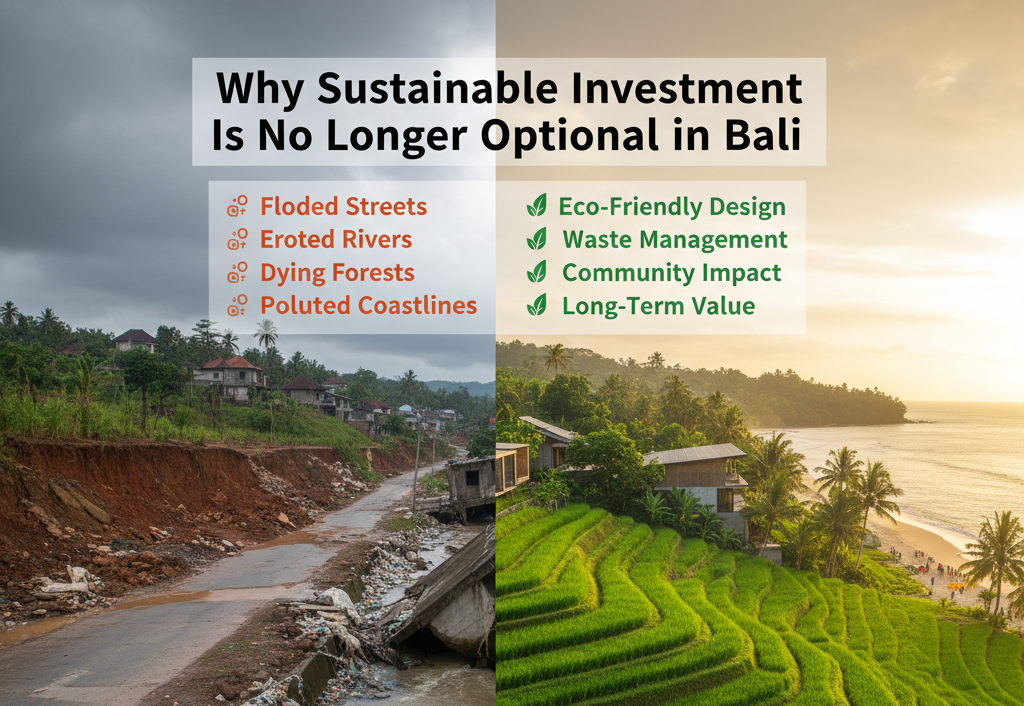
Over the past two years, Bali has been sending us a message. It hasn’t come through official channels or government press releases, but through something far more honest: flooded streets, eroded rivers, dying forests, polluted coastlines, and an island that is quietly telling us it cannot carry the weight of business-as-usual any longer.
For those of us who live here—and for the thousands of foreigners investing, building, and calling Bali home—this is not a distant environmental debate. It’s happening in front of our eyes.
The truth is simple: Sustainable investment in Bali is no longer a choice. It’s a requirement for the island’s survival.
And the investors who understand this first will not only protect Bali, but also protect their long-term assets, reputation, and ability to operate.
Floods, Forest Loss, and the Hidden Price of “Fast Growth”
Bali’s recent flooding episodes are not natural accidents. They are symptoms of:
- Rivers constricted by illegal structures
- Hillsides cut and stripped of roots
- Drainage that was never designed for this level of development
- Concrete replacing subak and soil
- Rainfall hitting hard surfaces at speeds the land cannot absorb
Every time rainwater has nowhere to go, Bali pays a price: roads collapse, villages flood, businesses close, tourism slows, and people suffer. Foreign investment is not the cause, but it has become part of the ecosystem—and therefore must become part of the solution.
The Plastic and Waste Crisis Nobody Can Ignore
Walk the beaches after a storm. Visit the riverbanks behind your favourite cafés. Look at the amount of F&B waste produced daily by restaurants, beach clubs, hotels, and villas.
Bali generates over 1.5 million tonnes of waste per year, and much of it is unmanaged. This isn’t just an environmental issue. It is:
- a tourism issue
- a health issue
- a branding issue
- an investment issue
Because no villa, resort, or restaurant can survive in a destination whose natural beauty is being overwhelmed by the waste of its own success.
Poor Drainage and Zoning: The Elephant in the Room
For years, zoning enforcement in Bali was “flexible.” Drainage was an afterthought. Developers built as though the island had limitless capacity. But today, everything is changing:
- Bali Province has tightened zoning compliance
- KKPR is mandatory
- Building approvals (PBG/SLF) demand environmental checks
- Risk-Based Licensing (PP 28/2025) links land use, environmental impact, and business activities into one digital system
The direction is clear: Bali will no longer tolerate projects that damage land, block drainage, or ignore the carrying capacity of villages and ecosystems. And this is exactly the direction the island needs.
What This Means for Foreign Investors
The old model was about building fast and selling fast. The new model is about building wisely, with:
- water management
- forest and river buffers
- community integration
- waste reduction
- renewable energy
- green infrastructure
- cultural alignment
- proper licensing and zoning
- long-term operational planning
Investors who build with sustainability at the core will:
- gain faster community acceptance
- avoid shutdowns or legal setbacks
- enjoy stronger long-term value
- experience lower operating costs
- attract the growing market of conscious travellers and long-stay residents
- become part of Bali’s future, not its problems
Bali is rewarding those who protect it—and quietly punishing those who don’t.
Nathaloka & Alassari: Two Models for a New Bali
The shift toward sustainable investment is not theoretical. It is already happening, and two examples illustrate what the future of Bali can look like.
🌿 Nathaloka (Tabanan)
A new generation eco-community built around:
- forest preservation
- subak protection
- wellness and Ayurveda
- slow-living, long-stay residential tourism
- regenerative design
- community partnerships
- and a philosophy inspired by Tri Hita Karana: harmony with God, people, and nature
Nathaloka doesn’t fight the land. It works with it. And that is exactly what Bali needs.
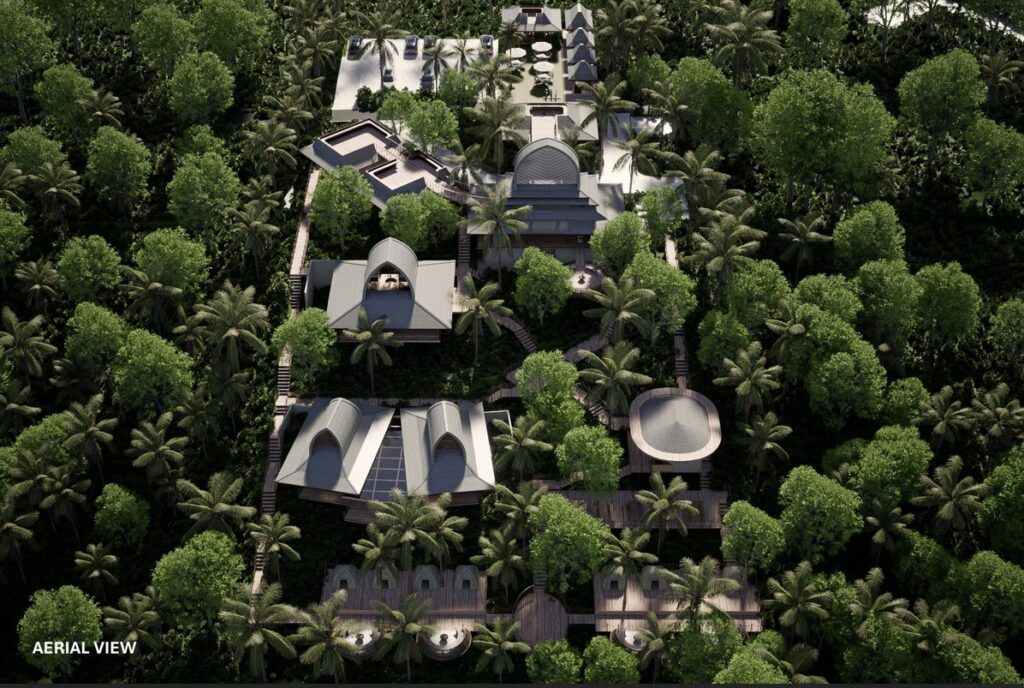
🌲 Alassari Sanctuary (Highlands)
Located in a natural forest reserve, Alassari offers a different template:
- bamboo architecture
- low-impact construction
- conservation of old-growth forest
- natural water flow preservation
- a model of luxury woven into nature rather than built on top of it
- long-term operational sustainability rather than high-footprint tourism
Alassari proves that luxury and sustainability are not opposites—they are partners. These are not conceptual dreams. They are living examples of how investors can align with Bali’s ecological reality while still creating strong, profitable businesses.
The Future of Bali Depends on the Choices Made Today
For those investing in Bali: Sustainability is not aesthetics. It is strategy. It protects:
- land value
- water access
- long-term community support
- operational continuity
- brand integrity
- and Bali itself
And perhaps most importantly: It ensures that the island remains a place people want to visit and live in—five, ten, twenty years from now. Bali is at a tipping point. The world is watching. And responsible investors now have the opportunity to be part of the solution, not the problem.
A Call to the New Generation of Investors
If you’re planning to invest in Bali, ask yourself: Will my project contribute to the island’s resilience, or add to its vulnerability? Will it:
- support local communities?
- respect zoning and natural systems?
- preserve water and forest?
- integrate with culture?
- leave the land better than it was found?
Sustainable investment is not slower. It is smarter. Not more expensive. More enduring.
Not a trend. A necessity. The projects that survive—and thrive—will be the ones that honour Bali rather than extract from it.
The Path Forward
At Seven Stones Indonesia, we believe in a simple principle: If Bali thrives, we all thrive. We support investors who want to build projects that:
- comply with law
- respect the land
- uplift communities
- and align with the island’s cultural and ecological fabric
Because Bali’s future will not be defined by how fast we build, but by how well we build. The time to choose sustainability is not tomorrow. It’s today. And Bali will remember those who chose wisely.