



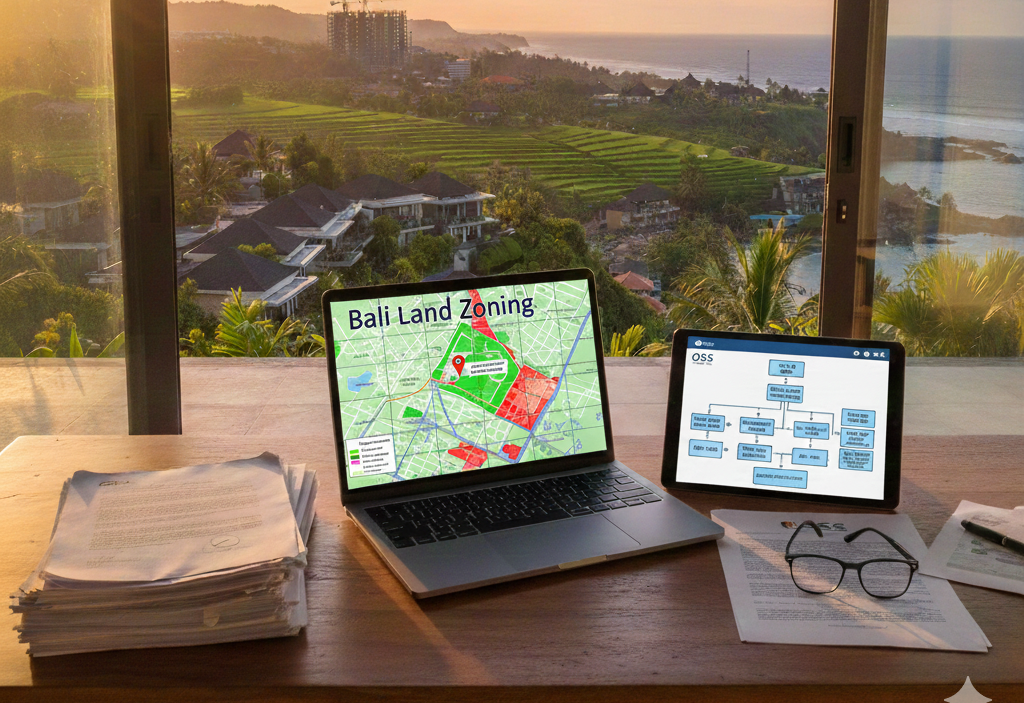
For years, Bali’s real estate market operated in a grey zone of convenience. Villas were sold on PowerPoints, shortcuts were common, zoning was “flexible,” and many foreigners trusted marketing brochures rather than legal processes. Those days are over.
By late 2025, the Indonesian government made one thing unmistakably clear: the era of unlicensed, unstructured property deals is finished.
New national regulations, tightened provincial oversight, and mandatory digital verification through OSS have fundamentally changed how investment works in Bali. This is good news—but only for investors who understand the new landscape. Here is the reality every foreigner should know in 2025–2026.
1. Bali Has Moved From Selling Villas to Building Legally Compliant Businesses
The single biggest shift? Property is no longer treated as a “villa purchase.” It is now treated as a business activity that must comply with:
- zoning rules (KKPR)
- licensing standards (per PP 28/2025)
- environmental approvals
- building approvals (PBG/SLF)
- operational standards set by relevant ministries
This applies whether the investment is a boutique resort, a co-living space, a rental villa portfolio, or an eco-wellness project. Foreigners often ask, “Can’t I just buy a villa and rent it out?”
Under the new framework, the answer is simple: Not without establishing a PT PMA and obtaining the correct business and zoning permissions. Indonesia is not closing doors to foreign investment—far from it. It is simply asking that investments operate as real businesses rather than informal rental properties.
2. PP 28/2025 Makes Everything Traceable and Verifiable
Indonesia’s latest umbrella regulation on risk-based licensing—PP 28/2025—does something very important: It connects zoning, licensing, environment, building approval, and operational standards into one digital trail inside OSS. This means:
- No more “under-the-table zoning.”
- No more building first and licensing later.
- No more rental villas operating without hospitality licenses.
- No more agents selling “foreign ownership loopholes.”
Every permit must match:
- the KBLI (business classification),
- the zone where the land sits,
- the planned building function,
- and the operational intentions of the investor.
If it doesn’t match, the OSS system simply rejects it—or flags it. This is why responsible advisory firms are becoming essential. And why the era of shortcut agencies is ending quickly.
3. The PT PMA + KKPR First Approach Is No Longer Optional
For safe investment in Bali, the correct order is now:
Step 1 — Establish the PT PMA (foreign-owned company). This gives you legal standing, corporate rights, tax IDs, and the ability to hold business licenses.
Step 2 — Secure KKPR (Zoning Approval). This verifies the land’s legal use—tourism, residential, commercial, agricultural, etc. Without KKPR, no building permit (PBG), no environmental permit, and no operational licensing can move forward.
Step 3 — Only THEN sign land agreements or begin design. Because your company now knows exactly what it is allowed to build and operate. This sequence protects you from:
- land scams
- zoning mismatches
- building permit failures
- operational shutdowns
- the common “villa rental is fine under a lease” myth
What used to be flexible are now strict workflows. Investors who follow them will be fine. Investors who don’t will pay for it later—sometimes painfully.

4. The Most Common Mistakes Foreigners Still Make (And What Seven Stones Indonesia Does Differently)
Mistake #1 — Buying first, checking licensing later
Many brokers still encourage this. It’s the fastest way to lose money in 2025.
Seven Stones Indonesia: We never let clients proceed without zoning checks, legal due diligence, and compliance pathways first.
Mistake #2 — Believing a lease equals a rental business license
It doesn’t. Leasing land gives you use rights—not commercial rights.
Seven Stones Indonesia: We structure PT PMAs correctly and secure operational KBLI relevant to your project.
Mistake #3 — Trusting “agent legal teams” who are tied to the seller
This leads to one thing: buyer risk.
Seven Stones Indonesia: We operate strictly as a buyer’s agent—independent, due-diligence first, compliance-led, and fully aligned with the investor, not the seller.
Mistake #4 — Assuming what worked in 2018 works today
Regulations have changed completely.
Seven Stones Indonesia: Our team works day-to-day with ministries, BKPM, Bali Province, and OSS updates. We don’t rely on old habits—we rely on current law and current practice.
Mistake #5 — Believing “everyone else is doing it” means it’s safe
This belief created thousands of illegal properties. The government is now fixing that.
Seven Stones Indonesia: We proactively guide clients into clean, long-term safe structures that match the direction of Indonesian law, not market shortcuts.
5. Why This New Investment Reality Is Actually Good News
✓ Greater investor protection. Because everything is traceable in OSS.
✓ Clearer rules. No more guessing. Proper zoning is the core.
✓ Stronger property values. Legal, compliant properties will appreciate faster because supply will reduce.
✓ More respect between investors and local communities. Investments become structured businesses that support local employment and contribute to Bali’s long-term sustainability.
✓ Better experiences for tourists and long-stay residents. Properly licensed businesses deliver safer, cleaner, and more professional services.
This is the Bali many of us have hoped to see for years.
6. Where Seven Stones Indonesia Fits Into This New Era
At Seven Stones Indonesia, we have always believed that the best investment is the legal one. The ethical one. The one that respects Bali, its communities, and its future. Today, that belief is more relevant than ever.
We work with clients through:
• Clear due diligence
• Clean PT PMA setups
• KKPR-first compliance
• Zoning verification
• Legal building workflows
• Environmental approvals
• Tourism and hospitality licensing
• Community-integrated development approaches
Because in 2025–2026, the winners will be the investors who take the right path—not the quick path. And those who enter Bali with structure, respect, and long-term thinking will find extraordinary opportunities waiting.
Final Thought
The Bali of the next decade will not be shaped by shortcuts or speculation. It will be shaped by investors who understand Indonesia’s direction: transparency, legality, community benefit, and sustainability.
The new investment reality is not something to fear. It is something to embrace. Because in a market that is finally maturing, the smartest investors will not be the fastest — but the ones who get it right.