



At sunrise in Jatiluwih, the rice terraces glow golden. Farmers carry offerings to the edge of their fields. Nearby, tourists take photos of the UNESCO-listed landscape.
In this scene lies Bali’s central tension: a place defined by deep spirituality, now one of the world’s most sought-after investment destinations.
The question is sharper in 2025 than ever before: can Bali remain true to its spiritual identity while opening its doors to global capital?
The Spiritual Framework: Tri Hita Karana
At the heart of Balinese life is Tri Hita Karana—the principle of harmony between people (pawongan), nature (palemahan), and spirit (parahyangan). This is not philosophy for bookshelves; it guides the layout of villages, the flow of irrigation in subak systems, and even modern spatial plans.
UNESCO recognized Bali’s subak landscapes as a World Heritage Site precisely because of this integration of ecology, culture, and spirituality. Every project in Bali—whether a family compound or a luxury resort—is expected, formally or informally, to respect this balance.
For investors, compliance is more than paperwork. It’s an understanding that ceremonies may pause construction, that temples require buffer zones, and that ignoring community norms risks more than bad publicity—it can halt a project.
The Global Investment Wave
Bali hosted 6.3 million foreign tourists in 2024, surpassing pre-pandemic highs. A new “Love Bali” levy now charges each visitor IDR 150,000 (~USD 9) to fund cultural preservation and environmental protection. Enforcement, after a soft start, is tightening.
At the same time, Indonesia has streamlined foreign investment through the OSS-RBA (Online Single Submission, Risk-Based Licensing) system. The most recent upgrade, Government Regulation No. 28 of 2025 (PP 28/2025), integrates spatial approvals (KKPR), environmental licenses (AMDAL, UKL-UPL, SPPL), and building permits (PBG/SLF) into a single flow. The system even allows “fictitious positive” approvals if agencies miss deadlines.
Combine booming demand, legal clarity, and digital systems, and Bali looks wide open for capital inflows. But investment without alignment risks damaging the very assets—land, water, and culture—that underpin returns.
Zoning and Sacred Geography
Bali’s provincial spatial plan 2023–2043 (Perda No. 2/2023) codifies Tri Hita Karana into hard rules:
➡️ Sacred areas (Kawasan Suci) include mountains, lakes, rivers, sea zones near temples, and ceremonial beaches. Development here is highly restricted.
➡️ Height limits cap most buildings at 15 meters. Authorities recently enforced this rule against high-rise violators.
➡️ Sacred overlays around pura (temples) can pause or alter project designs, particularly during ceremonies or processions.
In practice, these overlays are invisible to the untrained eye. Investors accustomed to thinking only in terms of land size and price often stumble here. What looks like “prime beachfront” may be legally or spiritually off-limits.
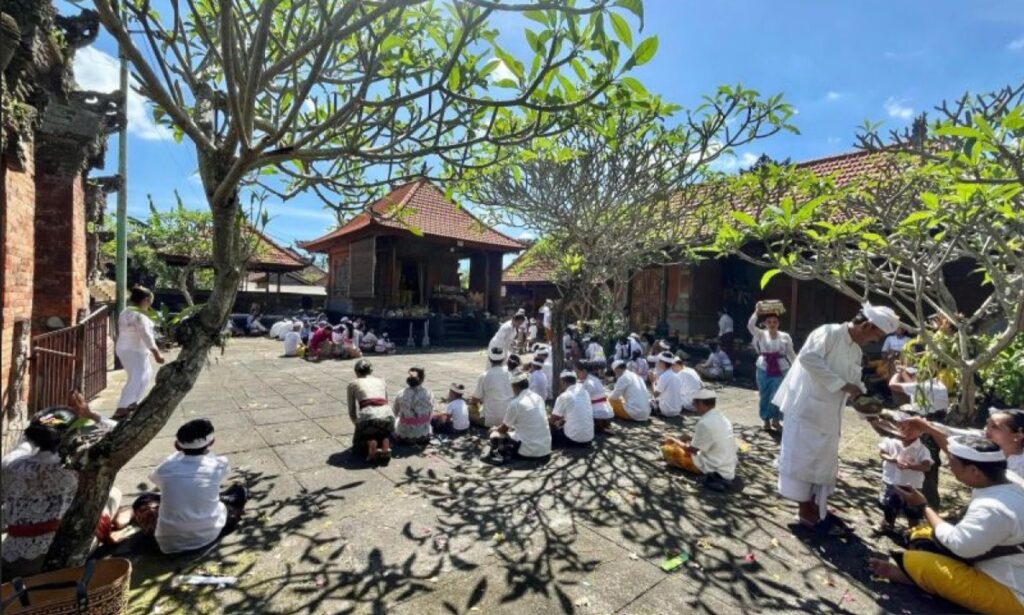
(Photo: via AntaraNews/Ni Komang Trikayani)
The Community Dimension: Desa Adat
Equally important are the desa adat (customary villages). These institutions govern ceremonies, mobilize community enforcement, and now enjoy strengthened recognition in law.
A letter of support from a desa adat may not always be a legal requirement, but in reality, it often determines whether a project can move forward peacefully. This is not a bribe or a token gesture—it is a process of alignment. Successful investors consult banjar leaders early, respect procession routes, and co-design benefits such as local employment, ceremonial access, or shared infrastructure.
Ignoring this layer is a classic mistake. Engaging sincerely with desa adat, by contrast, creates resilience: communities defend projects they feel part of.
Environmental Stress: The Hidden Costs
Two crises shadow Bali’s development trajectory:
1. Water Scarcity
South Bali already faces a water deficit. Pools, spas, and lush landscaping amplify demand, while over-pumping of groundwater causes saltwater intrusion in coastal zones. Developers who ignore this face operational headaches and community anger.
Smart projects now include rainwater harvesting, greywater recycling, and native landscaping. Investors should treat water efficiency not as an add-on but as part of the financial model.
2. Waste and Plastics
Bali introduced a single-use plastics ban in 2019 (bags, straws, styrofoam), upheld by the Supreme Court. Enforcement is patchy, but the direction is clear: future regulations will tighten.
Investors who design circular waste systems—sorting, composting, reuse—will avoid future costs and attract environmentally conscious guests.
Examples of Alignment
Some projects already prove that spiritual respect and global investment can coexist:
◉ Potato Head, Seminyak: This hospitality brand embedded sustainability into operations, achieving 97.5% waste diversion and building in-house recycling labs. Guests experience luxury, but operations reflect Bali’s waste realities.
◉ Green School, Abiansemal: Though not a resort, this bamboo-built campus integrates permaculture, renewable energy, and community programs like Kul Kul Connection, which links local families into its ecosystem. It shows how education, environment, and local engagement reinforce each other.
These cases demonstrate that alignment is not charity; it is a brand advantage. Projects that respect Bali’s roots gain international recognition and local legitimacy.
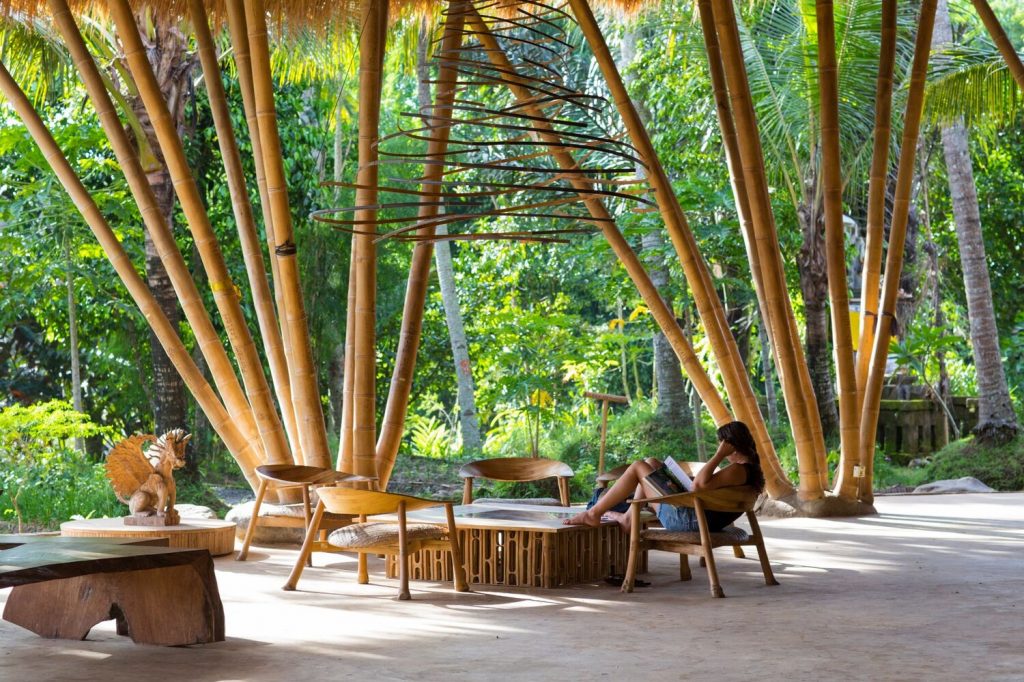
(Photo: via Green School Bali)
The Legal and Financial Framework
For foreign investors, the primary vehicle is a PT PMA (foreign-owned company). Regulations require:
✅ Minimum paid-up capital of IDR 10 billion (approx. USD 650,000), positioning PT PMAs as large enterprises.
✅ Sector-specific KBLI codes aligned with zoning maps.
✅ Compliance with PP 28/2025 workflows: KKPR → Environmental Approval → PBG/SLF → Business License.
The “fictitious positive” clause reduces bureaucratic delay risks, but investors must still ensure filings are accurate and zoning-compliant. Non-compliance can trigger revocation later, often after significant capital is sunk.
A Checklist for Responsible Investment in Bali
1. Sacred Mapping : Overlay your site with sacred zones and processional routes. If overlaps exist, budget design modifications.
2. Height and Horizon : Stay within the 15-meter limit. Use rooflines, courtyards, and landscaping creatively.
3. Water Accounting : Model water demand and supply at feasibility stage. Incorporate harvesting and reuse systems.
4. Community Engagement : Treat desa adat and banjar consultations as milestones. Include cultural infrastructure in your budget.
5. Legal Pathway : Run the OSS-RBA sequence early. Sequence permits carefully, and expect scrutiny under PP 28/2025.
6. Waste Systems : Plan for recycling and composting, not landfill dependence. Highlight this in branding.
7. Align with Policy Trends : Incorporate the “Love Bali” levy into marketing. Position projects as contributors to Bali’s preservation, not just beneficiaries.
Why Balance Is Smart Business
Investors sometimes treat these layers as obstacles. In reality, they are filters that protect Bali’s brand value. A development that ignores water stress or disrespects a temple may deliver short-term yield but risks backlash, reputational damage, or outright closure.
By contrast, projects aligned with Bali’s spiritual and ecological fabric tend to:
✪ Enjoy stronger community support.
✪ Move faster through licensing.
✪ Attract premium guests and buyers who value authenticity.
✪ Build reputations that endure beyond cycles of regulation.
The balance between spirituality and investment is not just ethical—it is financially rational.
Conclusion
Bali does not need to choose between spirituality and global investment. Its uniqueness lies precisely in weaving the two together. What matters is whether investors rise to the challenge: learning the language of Tri Hita Karana, engaging desa adat as partners, and embedding sustainability into both design and operations.
In doing so, investment becomes more than a financial transaction. It becomes part of Bali’s ongoing story—a story where global capital supports, rather than erodes, the harmony between people, nature, and spirit.
At Seven Stones Indonesia, we believe this fusion of respect, compliance, and sustainability is the future of Bali’s real estate and business landscape. The only question is: will investors step up to build with Bali, not just in Bali?
Written by Terje H Nilsen