



By: Terje H Nilsen
Bingin Beach, a legendary surf and tourism hotspot in Uluwatu, became the center of a controversial crackdown on July 21, 2025, as authorities began demolishing nearly fifty illegal businesses, including villas, homestays, restaurants, and cafes.
This action, apparently driven by violations of spatial planning laws, environmental regulations, and state land encroachment, has sparked heated debate. Some see it as a necessary step toward legal compliance and environmental preservation; others argue it’s a money-grab and devastates local livelihoods and Bali’s cultural charm.
This blog explores both perspectives, highlighting the legal, cultural, and economic complexities, and ultimately argues that this move signals Bali’s commitment to lawful and sustainable development for the benefit of its communities.
What Happened at Bingin Beach: Who’s Behind It And Why
The crackdown was led by the Bali Provincial Government, Badung Regency, and Satpol PP, following investigations that uncovered violations of spatial planning laws (RTRW), environmental regulations, building without permits (IMB/PBG) and unauthorized construction on state land. All hard to argue against.
Nyoman Budiutama, Chairman of Commission I DPRD Bali, emphasized that these buildings violated laws and clashed with Balinese architectural philosophy, which prioritizes harmony with nature, culture, and spirituality.
The government’s goal was to restore the area as a protected green zone, addressing over-tourism and unchecked development that has strained Bali’s infrastructure and environment, and to penalize and demolish between 45 and 48 illegal tourism businesses along Bingin Beach’s cliffside.
The On-the-Ground Operation
After multiple warnings and a final demolition warrant (Surat Perintah Pembongkaran No. 600.1.15.2, dated July 15, 2025), the operation began on July 21. Over 500 personnel, including Satpol PP (civil police), TNI (armed forces), Polri (national police), and local public works teams, used hand tools and heavy machinery to dismantle structures.
Officers cordoned off areas, sealed properties, and used tools ranging from hammers to heavy machinery. The operation targeted dozens of businesses and owners some of whom had been operating for decades.
According to government sources, the process followed three warning letters, giving owners a chance to dismantle structures voluntarily, though many resisted, citing insufficient notice or unclear legal guidance. The physical disruption, including damage to beach access routes, has fueled further concerns about short-term tourism impacts.
Local Perspective: Economic and Cultural Loss
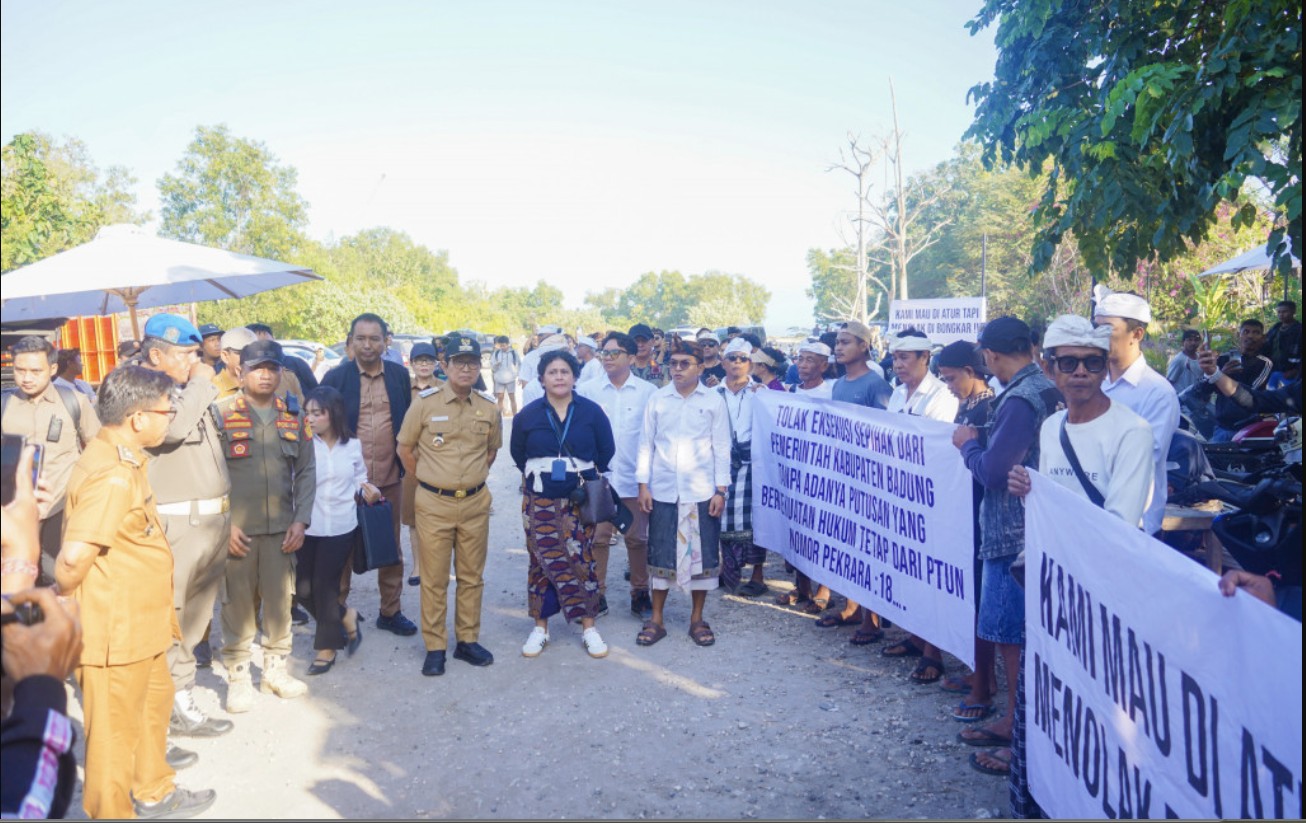
Naturally enough, local business owners and workers expressed outrage, arguing the demolitions were abrupt and ignored their livelihoods.
One owner said, “If we are considered wrong because we occupy state land… where was the state when we’ve operated for 30 years?”
Workers protested with banners reading “Save Bingin” and voiced concerns about job losses, shouting, “Who will pay BPJS?”
Many felt the government failed to offer solutions for displaced workers or consider the community’s reliance on these businesses, which supported families and local traditions like temple donations. Advocacy groups like Save Bingin Beach speculated the demolitions cleared the way for luxury developments, though officials have denied this.

Expat and Global Perspective: Nostalgia vs. Law
Internationally, the surfing community, led by figures like Kelly Slater, has criticized the government’s actions. Slater tweeted concerns that the move could pave the way for upscale beach clubs, eroding Bali’s bohemian charm.
Expat communities, often vocal about enforcing laws against illegal businesses elsewhere, rallied to “Save Bingin,” launching petitions and Instagram campaigns.
They see Bingin as a cultural haven, with rustic warungs and a laid-back vibe. However, this stance reveals a contradiction: many expats support legal enforcement when it suits their interests but complain when it disrupts their favorite spots, highlighting a gap in the understanding of Bali’s land laws and Adat customs.
National Law vs. Adat: A Deeper Conflict
The Bingin demolitions expose a tension between Indonesia’s national legal framework and Bali’s customary Adat law. National law, enforced by the government, prioritizes codified regulations like spatial planning (RTRW) and state land ownership.
In contrast, Adat law, rooted in the Balinese philosophy of Tri Hita Karana (harmony between humans, nature, and the divine), emphasizes communal stewardship and spiritual connections to land.
Some businesses may have had informal Adat approval (ijin adat) or even written Awig-Awig, contributing to local ceremonies and economies, but this does not override state regulations.
As Nilsen notes, “Running a business illegally is simply illegal. It means you’re gambling with the livelihood of your employees. When the enforcement finally comes, you can’t pretend to be the victim.”
Adat must be harmonized with provincial or national regulations to have legal force, and operating without permits like IMB/PBG or OSS/NIB leaves businesses vulnerable.
Possible Implications and Broader Issues
🔹 Over-tourism: Rapid development in Bingin, fueled by social media and digital nomads, has strained infrastructure, water, and waste management systems, prompting stricter enforcement.
🔹 Land Rights: State ownership of coastal land clashes with local perceptions of communal use, further complicating development.
🔹 Culture vs. Commercialization: The loss of traditional warungs risks replacing Bali’s cultural identity with homogenized luxury projects.
🔹 Environmental Concerns: Illegal constructions in green zones harm ecosystems, and post-demolition debris management remains unclear.
🔹 Access Issues: Damaged staircases may limit beach access, affecting tourism and local use.
The Other Side: Why Enforcement Matters
While there’s no doubt that demolitions caused immediate economic and emotional hardship, they signal Bali’s commitment to legal and sustainable development.
Unchecked construction has led to environmental degradation, overcrowding, and declining hotel occupancy due to unregulated villa operations. Many businesses operate informally, evading taxes, BPJS contributions, minimum wage, and THR (holiday bonuses), undermining fair labor practices.
The government’s action, backed by thorough investigations and multiple warnings, aims to restore state land, enforce zoning laws, and protect Bali’s ecological and cultural integrity. This move aligns with broader efforts to address over-tourism and ensure development benefits locals in the long-term, rather than short-term profits for a few.
Expat Irony: Selective Support for Law
Expat reactions reveal a paradox. Many who advocate for cracking down on illegal businesses or visa overstays now decry the Bingin demolitions as “brutal.” Supporting an “authentic Bali” while ignoring illegal operations reflects selective ethics, prioritizing personal convenience over consistent legal standards.
As Nilsen points out, “turning a blind eye only when it suits doesn’t say much for integrity. The truth is business owners who bypassed permits gambled with their employees’ livelihoods, not the government.” The government has pledged to explore solutions for affected workers, but as Governor Koster stated, “We cannot allow violations to continue just to protect jobs.”
Time For Reflection
The Bingin Beach demolitions are a pivotal moment for Bali, demonstrating that the government is serious about enforcing legal compliance and prioritizing long-term sustainability over short-term gains. While the immediate impact on local workers and businesses is undeniable, the responsibility lies with owners who operated outside the law, not with authorities upholding it.
Moving forward, questions remain: Will Bingin be restored as a green zone, or will new, compliant developments emerge? Can the government support displaced workers while maintaining legal standards?
By harmonizing national law with Adat principles and enforcing regulations consistently, Bali can rebuild a future that benefits local communities, preserves its cultural soul, and ensures sustainable tourism for all.
If you’d like legal advice or local insights into Bingin and other areas likely to be targeted for regulation violations, reach out today via [email protected]