



And what 2026 is quietly telling smart investors
Written by : Terje. H Nilsen
Ask a villa owner in Canggu, a developer in Uluwatu, and a landholder in Tabanan whether Bali property prices are still rising — and you’ll get three different answers. All of them are correct.
Because Bali is no longer one property market. It is several micro-markets moving at different speeds, shaped by tourism numbers, regulatory enforcement, construction costs, zoning discipline, and something less measurable: confidence.
So let’s step back from the noise and ask the real question. Are prices rising?
Yes.
And no.
And that nuance is where opportunity lives.
The Big Picture: Growth — But Slower, Smarter
Official data shows Indonesia’s primary residential property market growing modestly year-on-year. Bali, typically, performs slightly stronger than the national average — but nothing like the post-pandemic surge we saw in 2022–2024.
What that tells us is important: We are no longer in the hype cycle. We are in the filtering cycle.
Prices are not exploding. But quality assets are not discounting either.
Tourism Still Fuels the Engine — But It’s Stabilising
Foreign visitor arrivals remain high on a yearly basis. Bali has re-established itself as Southeast Asia’s premium lifestyle destination. Hotels — especially upper mid-scale and luxury — continue to perform well.
But monthly fluctuations show something different: the vertical growth curve is flattening. For investors, that means:
▪ You can’t assume automatic yield growth.
▪ You must underwrite conservatively.
▪ Performance now depends more on management and positioning than on overall arrivals.
The era where “Bali tourism is back” was enough to justify a purchase is over. Now the question is: Can this specific property compete?
Where Prices Are Still Rising
1. Prime Lifestyle Corridors
Areas like Canggu, Berawa, Pererenan and Uluwatu continue to command premiums — not because they are fashionable, but because demand ecosystems exist: F&B, beach clubs, co-working, international schools, wellness culture.
Limited clean land + sustained demand = upward pressure. But only for assets that make sense.
2. Compliance-Ready Villas
This is the silent shift in 2026. A villa with:
▪ Zoning aligned
▪ Proper licensing pathway
▪ Clear governance structure
▪ Operational viability
… is now worth materially more than a “looks good on Instagram” villa. Regulatory enforcement is no longer theoretical. It is operational. The compliance premium is real — and widening.
3. High-End Eco & Nature-Based Developments
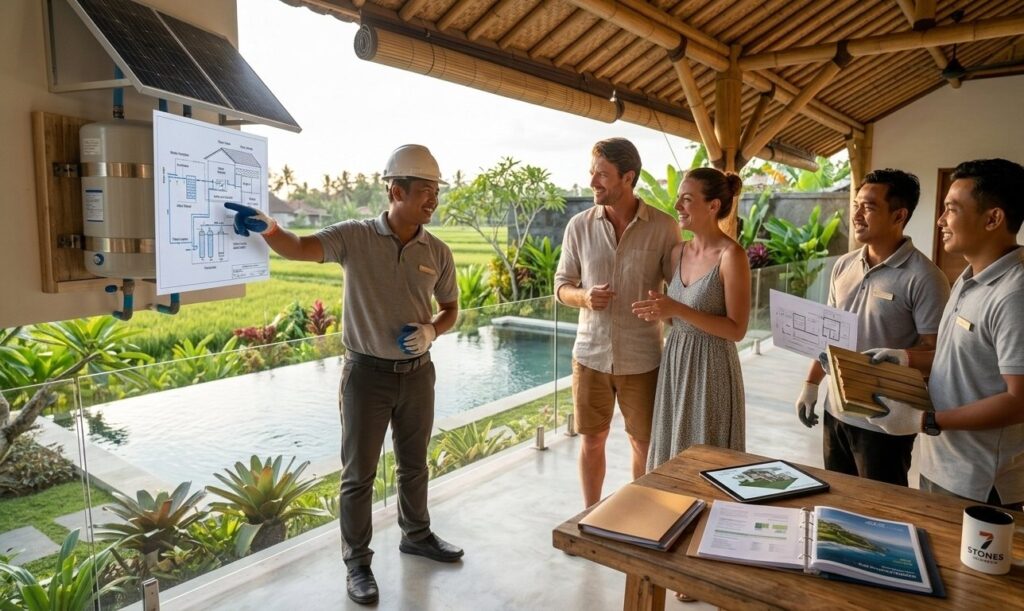
Space. Water security. Green buffer zones. Quiet. Demand is growing for Tabanan, parts of Ubud, and structured eco-resort concepts. Buyers are increasingly asking:
“Is this sustainable?”
“Is this future-proof?”
“Will this flood?”
“Is the water stable?”
That question alone changes valuation.
Where Prices Are Flat — Or Quietly Falling
1. Overbuilt Lookalike Villas
Identical two-bedroom boxes. Same renderings. Same pools. Same marble. Supply has caught up. In parts of Canggu, price growth has stalled unless the property is differentiated by:
▪ Design
▪ Brand
▪ Management
▪ Or price realism
2. Structurally Weak Deals
Pro-forma yields based on 85% occupancy. Zoning that “should be fine.” Licenses that “can be arranged later.”
These assets don’t necessarily crash in price. They just stop moving.
Liquidity disappears before price does. That’s the first warning sign.
Construction Costs: The Invisible Floor
Even when demand softens, replacement value matters. Building in Bali is not getting cheaper:
▪ Imported materials
▪ Skilled labor shortages
▪ Infrastructure upgrades
▪ Utility costs
That creates a pricing floor under quality builds. It does not protect speculative projects. But it supports well-executed ones.
What Seven Stones Sees for 2026
At Seven Stones, we believe 2026 is the year Bali becomes a fully structured market. Not formalised in theory. Formalised in practice. Here is how we see it unfolding:
1️⃣ The Market Will Split Further
There will be two clear segments:
Structured Assets
▪ Zoning aligned
▪ Licensing viable
▪ Governance clean
▪ Tax clear
▪ Professional management
These will:
▪ Hold value
▪ Trade with confidence
▪ Attract institutional capital
▪ See steady price appreciation
And then there will be everything else. The gap between the two will widen.
2️⃣ Yield Will Become More Honest
Investors will stop buying projections. They will demand:
▪ Proven ADR
▪ Verified occupancy
▪ Operational cost transparency
▪ Utility reliability
▪ Water and waste clarity
That transparency will stabilise pricing. It will also eliminate speculative upside in weaker projects.
3️⃣ Emerging Areas Will Reward Patience
Tabanan, structured parts of Ubud, and selective Lombok corridors will outperform — but only if infrastructure, zoning clarity, and governance are properly understood.
Early entry without structure is gambling. Early entry with structure is strategy.
4️⃣ Eco Will Move From Marketing to Valuation
Sustainability is no longer branding. It is insurance.
Flood-resilient design, water systems, waste handling, solar, green buffer zones — these will increasingly influence resale liquidity. The future buyer will ask tougher questions.
5️⃣ The “Easy Money” Era Is Over
Between 2022–2024, many investors experienced rapid price appreciation simply by entering the market.
That phase is finished. The next phase rewards:
▪ Discipline
▪ Due diligence
▪ Governance
▪ Long-term planning
And those who understand how Bali’s regulatory framework actually works. So… Are Prices Rising?
Yes — in the right segments.
No — in overbuilt or structurally weak ones.
The Bali market is maturing. And maturing markets don’t collapse — they differentiate.
Final Perspective
Bali is not cooling. It is filtering. The buyers who approach 2026 with structure, realistic underwriting, and regulatory clarity will still see growth. But appreciation will come from:
▪ Quality
▪ Compliance
▪ Location discipline
▪ Operational excellence
Not from hype. In today’s Bali market, price growth is no longer driven by excitement. It is driven by structure. And structure is where long-term value lives.