




(And Why It Absolutely Should)
Written by : Terje. H Nilsen
Drive through parts of Canggu today and you could be anywhere in the tropics. Concrete cubes. Glass boxes. Imported design language. Minimalist architecture with no memory.
Yet ask any investor, any returning tourist, any long-term resident what draws them to Bali — and the answer is rarely “modern geometry.”
It’s culture.
It’s ceremony.
It’s temple architecture against a sunset.
It’s the sound of gamelan across a rice field.
Bali’s culture is not a decorative feature. It is the island’s economic engine. And if we don’t reflect that in property design and building governance, we risk slowly eroding the very foundation of the market.
Culture Is Bali’s Competitive Advantage
Unlike Dubai, Phuket or parts of Mexico, Bali’s global appeal is not driven by scale or spectacle. It is driven by identity.
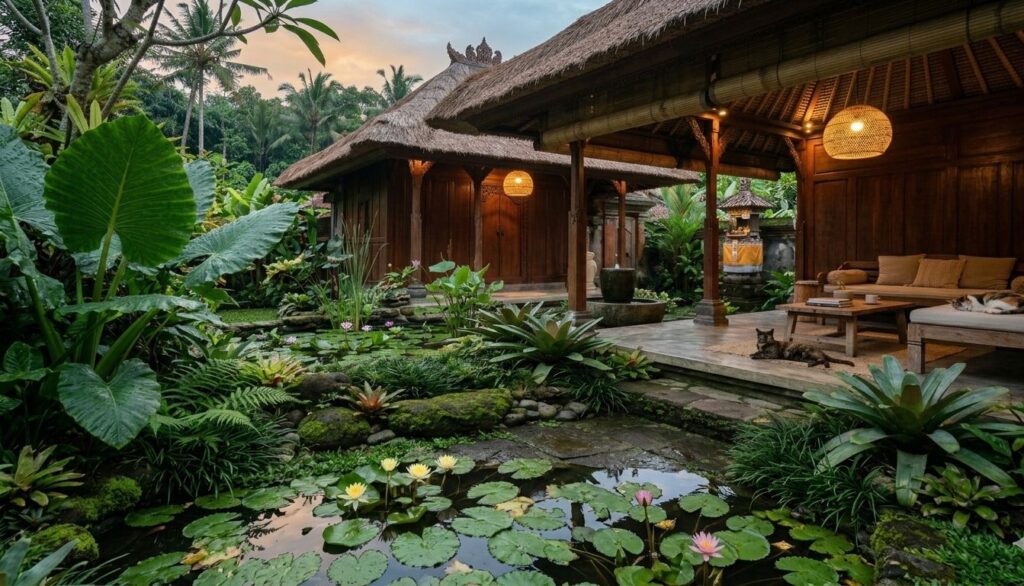
The daily offerings. The spatial philosophy of Tri Hita Karana — harmony between people, nature and spirit. The orientation of buildings relative to mountains and sea. The courtyard as the heart of the compound. Balinese architecture was never random. It was cosmological.
Traditionally:
▪ The family temple occupies the most sacred position (kaja-kangin).
▪ Sleeping, cooking, gathering — each has a spatial hierarchy.
▪ Open-air living connects indoor and outdoor seamlessly.
▪ Materials are local: stone, timber, thatch, earth.
This is not nostalgia. This is structured design rooted in worldview. When developments ignore this, Bali begins to look like everywhere else. And when Bali looks like everywhere else — pricing power declines.
The Economic Logic of Cultural Integrity
From a purely business perspective, preserving cultural architecture is rational. Authenticity commands premium pricing. We are seeing this already:
▪ Guests increasingly prefer villas with traditional joglo roofs or Balinese detailing over generic modern builds.
▪ High-end eco-resorts integrate temple-like gateways, natural materials, and landscape-driven layouts.
▪ Buyers are asking for “authentic Bali experience,” not “international cube in tropical climate.”
Culture is not anti-investment. Culture is a value multiplier.
Lessons from Risør, Norway
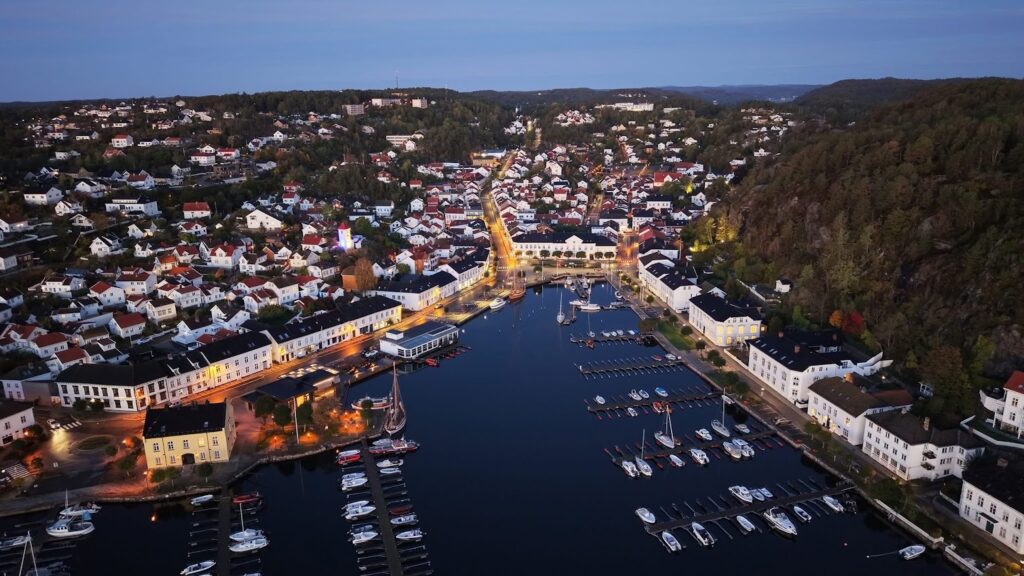
I grew up in Risør, a small coastal town on the Skagerrak. Risør is known as “The White City by the Sea.” Hundreds of wooden houses, painted white, line the harbor. Many date back to the 18th and 19th centuries.
You cannot simply build a glass cube in the middle of that town. Local regulations are strict:
▪ Facade colors are controlled.
▪ Window proportions matter.
▪ Roof angles are preserved.
▪ Materials must align with heritage.
▪ Even small changes require approval.
Some developers complain. But here’s the result :
Risør has protected its identity for generations. Tourism thrives. Property values remain stable. The city feels coherent. Heritage protection did not limit growth. It ensured sustainable growth. The strictness is not anti-development. It is pro-identity.
Should Bali Be Stricter?
Bali already has traditional spatial planning principles embedded in customary law (adat), and provincial zoning regulations define heights, setbacks, and usage. But enforcement and interpretation vary. In certain areas:
⮕ Height limits are creatively “interpreted.”
⮕ Traditional facade requirements are loosely applied.
⮕ Large developments mimic international resort styles rather than Balinese forms.
⮕ Materials often ignore climatic suitability and local craft traditions.
If Bali is serious about long-term positioning as a premium cultural destination, then design guidelines must go beyond basic zoning. We should be asking:
▪ Should certain tourism zones require visible Balinese architectural elements?
▪ Should facade harmony be considered part of licensing?
▪ Should green building certifications incorporate cultural design principles?
▪ Should new developments demonstrate alignment with local spatial philosophy?
This is not about freezing Bali in time. It is about ensuring evolution respects origin.
Culture + Sustainability = Future Value
The strongest future positioning for Bali is not “cheapest short-term rental yield.” It is:
⮕ Medium to high-end eco resorts.
⮕ Culturally grounded villa communities.
⮕ Developments integrated with landscape and water systems.
⮕ Architecture that reflects both tradition and environmental intelligence.
Traditional Balinese design was climate-smart long before air-conditioning existed:
✓ Cross ventilation.
✓ Shaded pavilions.
✓ Elevated structures.
✓ Courtyard cooling systems.
✓ Natural drainage patterns.
Modern sustainability conversations — water management, heat reduction, flood prevention — are often rediscovering what traditional architecture already knew.
If building codes align cultural design with environmental performance, Bali doesn’t just preserve beauty. It preserves resilience.
The Risk of Cultural Dilution
If design becomes fully internationalized, several risks emerge:
1. Loss of differentiation versus competing destinations.
2. Increased heat load and energy consumption due to glass-heavy builds.
3. Flooding and drainage problems when traditional spatial logic is ignored.
4. Reduced long-term land value once visual coherence disappears.
Markets formalize. Enforcement increases. Investors adjust. But culture loss is harder to reverse than licensing reform.
A Balanced Way Forward
Bali does not need to ban modern architecture. It needs to define boundaries:
▪ Height discipline.
▪ Landscape integration.
▪ Cultural facade guidelines.
▪ Material intelligence.
▪ Community consultation.
A property market anchored in culture is more stable than one driven purely by speculative yield. This is especially relevant now, as enforcement increases and Indonesia signals a move toward structured, compliant tourism development.
The question is not whether Bali will evolve. The question is: evolve into what?
What Investors Should Consider
Before purchasing or developing property in Bali, serious investors should ask:
⮕ Does this design enhance or dilute local identity?
⮕ Will stricter enforcement affect this structure in five years?
⮕ Does the architecture support long-term environmental sustainability?
⮕ Is this aligned with where Bali wants to go — not just where it is today?
Culture is not a branding accessory. It is the island’s core asset. And core assets must be protected.
Final Reflection
When I walk along the harbor in Risør, I see discipline. When I walk through parts of Bali, I see brilliance — and sometimes fragmentation.
Bali has something rare: a living culture that still shapes daily life. If we allow property development to disconnect from that culture, we weaken the foundation of the entire tourism economy.
If we integrate culture into building governance and design standards, Bali remains Bali. And that is its greatest competitive advantage.