



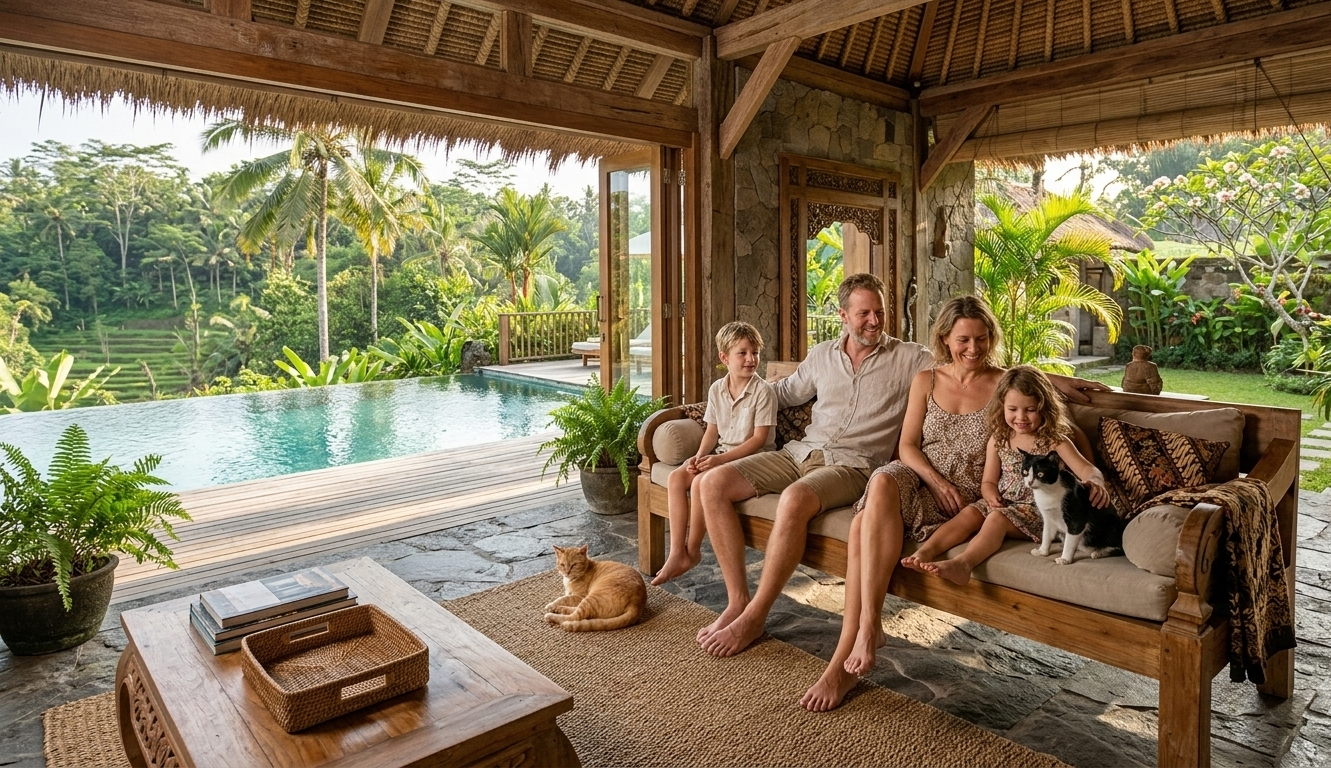
Breeze-Based Cooling, Rainwater Harvesting, Bamboo Construction & Permaculture Living
Written by : Terje. H Nilsen
Bali’s villa market is evolving. Not just in style. Not just in finishes. But in philosophy. In 2026, sustainability is no longer a marketing layer added after design is complete. It is shaping architecture from the very first sketch.
Across the island — and particularly in emerging eco-destinations like Tabanan — investors, architects, and developers are embracing climate-responsive design, regenerative landscaping, and natural materials as core foundations of luxury living. Because in Bali today, true luxury is harmony with nature.
Architecture That Breathes: Passive & Breeze-Based Cooling
The era of fully sealed, glass-heavy villas dependent on constant air conditioning is fading.
Designers are returning to climate intelligence:
▪ Cross-ventilation layouts
▪ Pavilion-style compounds
▪ Deep overhangs and shaded terraces
▪ High ceilings that allow heat to rise and escape
▪ Perforated screens and louvered openings
This is not nostalgia — it is performance.
Bali’s tropical winds are free energy. Villas designed to capture airflow dramatically reduce electricity consumption while creating a more authentic living experience.
In places like Tabanan — where rice fields, coastal breezes, and open landscapes define the microclimate — passive cooling simply works better than mechanical systems. Sustainability begins with respecting the wind.
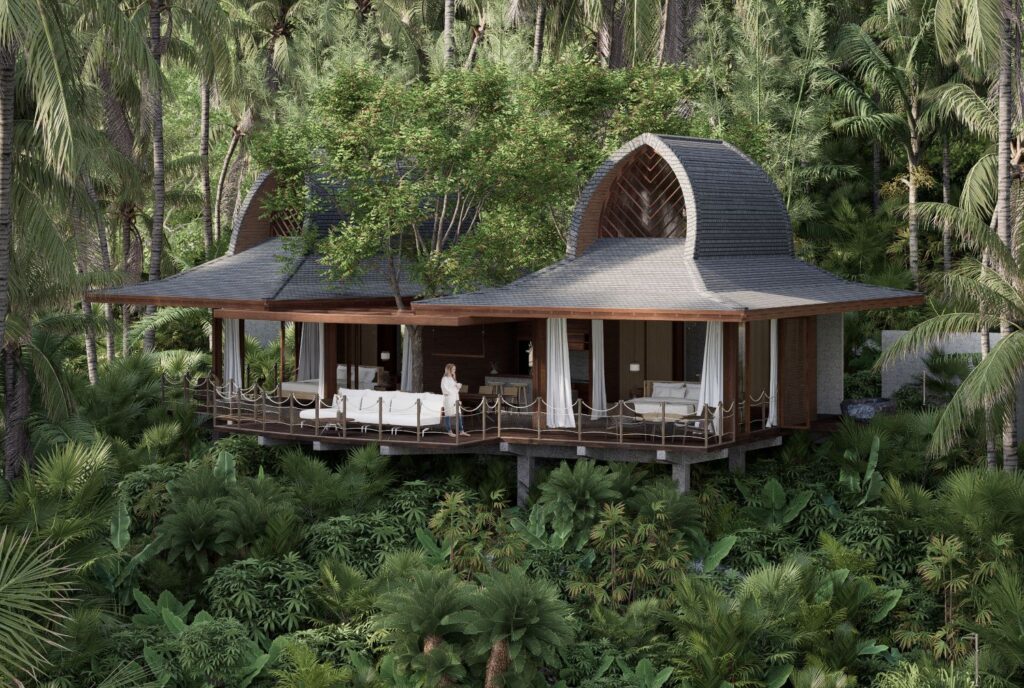
Water as a Design Priority: Rainwater & Greywater Systems
Water management is becoming one of the most critical sustainability discussions in Bali. Increasing density in the south has exposed stress on groundwater systems. Responsible villa projects in 2026 are responding by integrating:
▪ Rainwater harvesting tanks
▪ Greywater recycling for irrigation
▪ Natural filtration systems
▪ Permeable landscaping to recharge aquifers
This is particularly relevant for larger estates and eco-retreat projects.Imagine a development like Nathaloka — where water is treated as a circular system rather than a consumption line. Tropical rainfall becomes an asset, not runoff.
Smart water management protects the land, lowers long-term operational costs, and strengthens regulatory resilience.
Bamboo & Biobased Materials: Structural Beauty
Bali continues to position itself as a global laboratory for bamboo architecture. Bamboo is:
▪ Rapidly renewable
▪ Structurally strong
▪ Low in embodied carbon
▪ Naturally suited to tropical climates
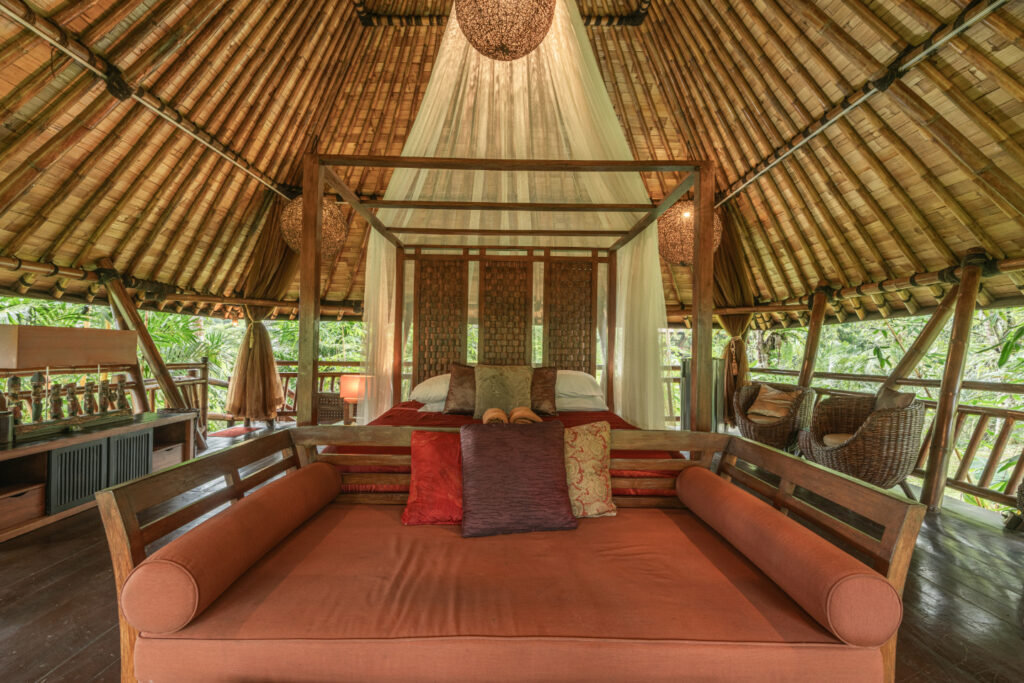
But beyond sustainability metrics, bamboo reconnects architecture to place. In projects like Alassari, natural materials are not decorative — they are experiential. Structures feel organic, breathable, and rooted in the landscape.
2026 design trends show increasing hybrid builds: concrete where necessary for durability, combined with bamboo, reclaimed timber, volcanic stone, and lime plaster for warmth and environmental performance. The result is architecture that feels alive.
Permaculture & Edible Landscapes
Another powerful shift in Bali villa design is the rise of permaculture integration. Instead of ornamental gardens that demand high irrigation, forward-thinking developments are planting:
▪ Fruit trees
▪ Herbs and medicinal plants
▪ Edible shrubs
▪ Pollinator-supporting species
▪ Layered food forests
Landscapes are becoming living ecosystems. For villa owners and guests, this means a tangible connection to land — picking fruit in the morning, dining from garden harvests, walking through green corridors that sustain biodiversity.
In areas like Tabanan — still rich with agricultural heritage — permaculture aligns beautifully with the surrounding environment. It is sustainability that produces value.
Biophilic Design & Indoor-Outdoor Integration
Bali has always blurred the boundary between inside and outside. In 2026, this principle evolves further through biophilic design:
▪ Open courtyards
▪ Transitional shaded spaces
▪ Living walls
▪ Natural pools and filtration ponds
▪ Visual connection to rice fields, jungle, or ocean
The goal is not just aesthetic openness — but psychological and ecological balance. People invest in Bali for nature. Villas that disconnect from it lose their essence.
Why This Matters for Investors
Eco-friendly villas are no longer niche. They increasingly command:
▪ Higher occupancy rates
▪ Premium nightly returns
▪ Stronger long-term resale value
▪ Greater regulatory stability
Environmental awareness among travelers continues to grow. Guests actively seek properties aligned with sustainability values.
More importantly, Indonesian regulatory enforcement is strengthening around environmental compliance, wastewater management, and zoning. Building sustainably today reduces future risk.
In markets like Tabanan — where eco-luxury is quietly becoming the new benchmark — structured, nature-aligned development is defining the next growth phase.
The Shift: From Eco-Friendly to Regenerative
What we are witnessing in 2026 is not simply green design. It is regenerative thinking. Villas that:
▪ Work with wind instead of fighting it
▪ Capture water instead of draining it
▪ Grow food instead of importing it
▪ Use materials that replenish rather than deplete
Bali’s future depends on this shift. And investors who understand this now are positioning themselves ahead of the curve.
How Seven Stones Can Help
Sustainable design is inspiring. But in Bali, inspiration must align with structure. At Seven Stones Indonesia, we assist investors and developers in translating eco-friendly vision into legally compliant, operationally sound, and financially viable projects. That includes:
▪ Comprehensive zoning and land due diligence
▪ KKPR, PBG, SLF and licensing alignment under Indonesia’s OSS Risk-Based system
▪ Structuring the correct PT PMA or PT PMDN model depending on operational strategy
▪ Environmental compliance guidance, including wastewater and sustainability standards
▪ Connecting clients with trusted architects experienced in passive cooling, bamboo construction, and regenerative landscaping
In areas like Tabanan, where projects such as Nathaloka and Alassari reflect a new generation of eco-luxury thinking, structure is what protects both your capital and the land itself.
True sustainability in Bali is not only about bamboo and gardens. It is about building in harmony with regulation, community, environment, and long-term reality.
If you are considering an eco-focused villa or resort project in 2026, the time to design it correctly — legally and environmentally — is from the foundation up.
Contact us at: [email protected] or WhatsApp: +62- +62 877-7711-7701.