



Written by: Terje. H Nilsen
Demand, Design Shifts, Eco-Resorts, and Where Smart Capital Is Moving
Bali in 2026 is not slowing down. It is maturing. Tourist arrivals are rising. Capital is still entering. But performance is now driven by quality, authenticity, space, and operational structure — not speed or speculation.
Tourism Growth: A Strong Demand Base
Foreign tourist arrivals continue to expand:
▪ January 2025: ~530,000 international visitors
▪ January 2026: ~590,000 international visitors
That represents roughly +11% year-on-year growth. The demand base is healthy. But in 2026, demand is flowing toward specific types of assets — not everything equally.
Authentic Bali Design Is Outperforming Generic Builds
One of the clearest shifts in buyer and guest behaviour:
Guests increasingly prefer traditional Balinese architecture over white minimalist “anywhere tropical” villas. We are seeing stronger performance in properties featuring:
▪ Natural stone and teak finishes
▪ Joglo-inspired pavilions
▪ Alang-alang roofing
▪ Courtyard layouts
▪ Cultural detailing
▪ Integration with landscape
Why? Because Bali is an experience destination.
The oversupply of fast-built modern villas from 2022–2024 has created visual fatigue. Properties that feel rooted in place — spiritually, architecturally, environmentally — are capturing stronger occupancy and pricing resilience.

Rising Demand for Medium to High-End Eco Resorts
A major 2026 trend:
Capital is moving toward space, privacy, and nature-based experiences. We are seeing growing demand for:
▪ Boutique eco resorts (10–30 keys)
▪ Medium to high-end jungle or rice-field retreats
▪ Wellness-oriented properties
▪ Larger land plots with privacy buffers
▪ Architecturally sensitive, low-density developments
Why this shift?
1. Post-pandemic travel behaviour favours space and nature.
2. Remote workers stay longer and prefer quieter environments.
3. Sustainability and ESG narratives are influencing investor capital.
4. Guests are willing to pay premiums for authenticity and tranquility.
This trend is particularly visible in:
▪ Ubud outskirts
▪ Tabanan
▪ Sidemen
▪ North Bali
▪ Select Bukit cliffside pockets
However, eco positioning must be real — not just marketing language. Water systems, waste management, zoning alignment, and infrastructure planning are critical. Smart capital is looking for:
✔ Larger land parcels
✔ Lower density
✔ Proper environmental documentation
✔ Real sustainability design (not greenwashing)
✔ Long-term operational viability
Unit Size & Liquidity Trends
The most liquid segments remain:
▪ Efficient 2-bedroom villas
▪ Compact 3-bedroom villas
▪ Selectively located apartments
Larger villas still sell — but require sharper pricing and stronger positioning. Liquidity matters more than speculative yield.
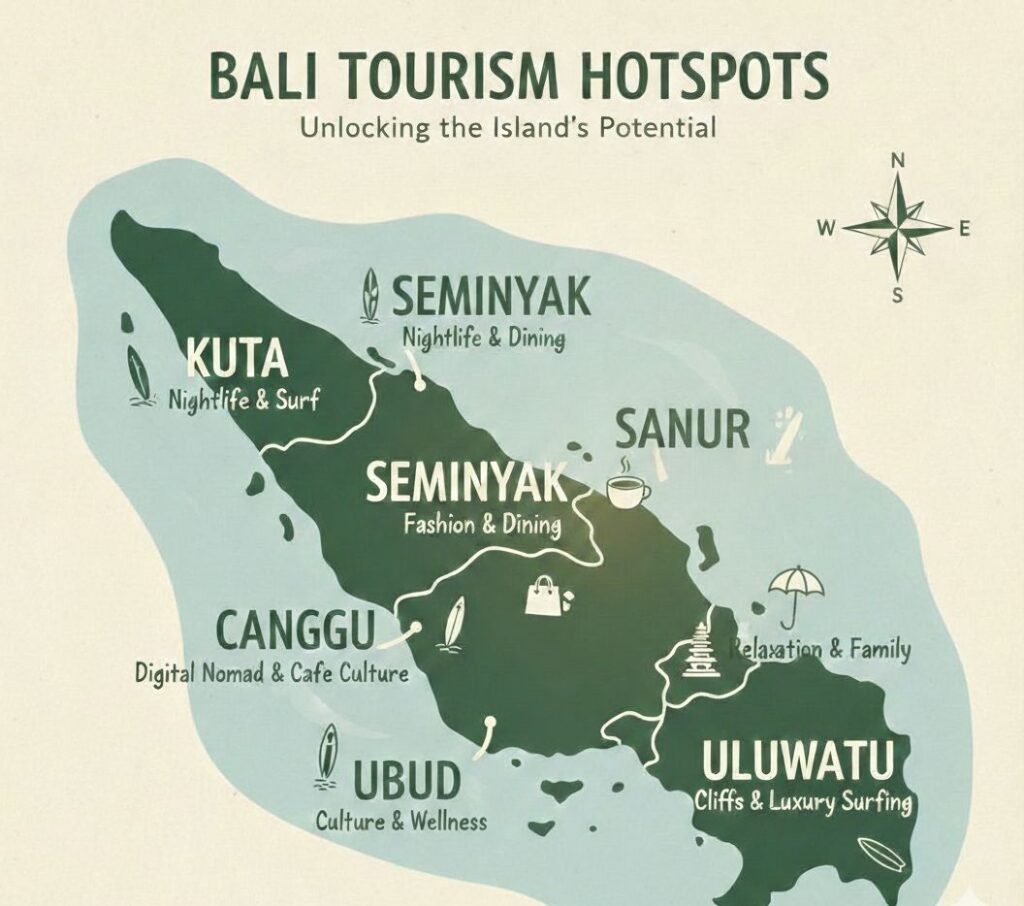
Regional Performance: Micro-Market Selection Is Critical
▪ North Badung (Canggu–Berawa–Pererenan) : Active but saturated. Mediocre product struggles.
▪ Bukit Peninsula (Uluwatu–Bingin–Pecatu) : Premium lifestyle demand continues, but zoning and enforcement visibility are high.
▪ Sanur : Structured growth, more predictable zoning, increasing investor interest.
▪ Ubud & Surroundings : Strong demand for authentic, eco and wellness-oriented product.
2026 is not about “which region.” It is about “which pocket, which zoning, which access, which product.”
The Enforcement Overlay: Zoning & Operational Reality
The most underestimated factor in 2026: Enforcement is shaping value. There are no dramatic new laws. But:
▪ Zoning enforcement is visible
▪ Coastal and green zone protection is real
▪ Short-term rental scrutiny is increasing
▪ Platforms are under pressure to remove unlicensed listings
▪ OSS system integration improves cross-checking
In practical terms: In many cases, short-term rental operations are structurally more viable through properly arranged domestic operating entities, while many foreign-owned structures face limitations in securing certain operational licences.
If the asset cannot be legally operated:
▪ Cash flow is unstable
▪ Financing is difficult
▪ Exit value compresses
Operational legality is now part of valuation math.
The Quality Divide: Fast Build vs Durable Build
The 2022–2024 construction surge created:
▪ Oversupply in certain pockets
▪ Lower build quality in some projects
▪ Off-plan delays and delivery risk
2026 buyers are more cautious. Smart capital prefers:
▪ Completed projects
▪ Proven developers
▪ Realistic ROI projections
▪ Engineering transparency
▪ Authentic architectural identity
Instagram aesthetics are no longer enough.
Where Smart Capital Is Moving
In 2026, sophisticated investors are:
✔ Buying for 5–10 year structural holds
✔ Prioritising eco, space, and authenticity
✔ Selecting liquid unit sizes
✔ Underwriting zoning before yield
✔ Avoiding speculative off-plan without protection
✔ Structuring operations correctly from day one
This is not a retreat market. It is a professionalisation market.
Key Takeaways
▪ Tourist arrivals are growing (+~11% YoY January)
▪ Demand is strong but highly selective
▪ Authentic Bali design is outperforming generic builds
▪ Eco-resorts and nature-based developments are gaining traction
▪ Pricing is stabilising in oversupplied pockets
▪ Zoning and operational legality now influence valuation
▪ Build quality separates winners from distressed assets
How Seven Stones Real Estate Can Assist
In today’s Bali market, structure defines success.
Seven Stones supports investors through:
⮕ Micro-Market & Hotspot Analysis : Understanding where real demand lands — not where hype sits.
⮕ Zoning & Operational Due Diligence : Land use alignment, permit stack review, operational feasibility.
⮕ Eco-Resort Structuring : Land configuration, environmental considerations, sustainable positioning strategy.
⮕ Build Quality Review : Contractor due diligence, specification transparency, lifecycle cost modelling.
⮕ Operational Structure Design : Clear pathways for compliant short-term rental or resort operations.
⮕ Exit Strategy Planning : Ensuring long-term liquidity and legal security.
If 2022–2024 was about speed, 2026 is about structure, authenticity, and durability. And structured capital wins long term.